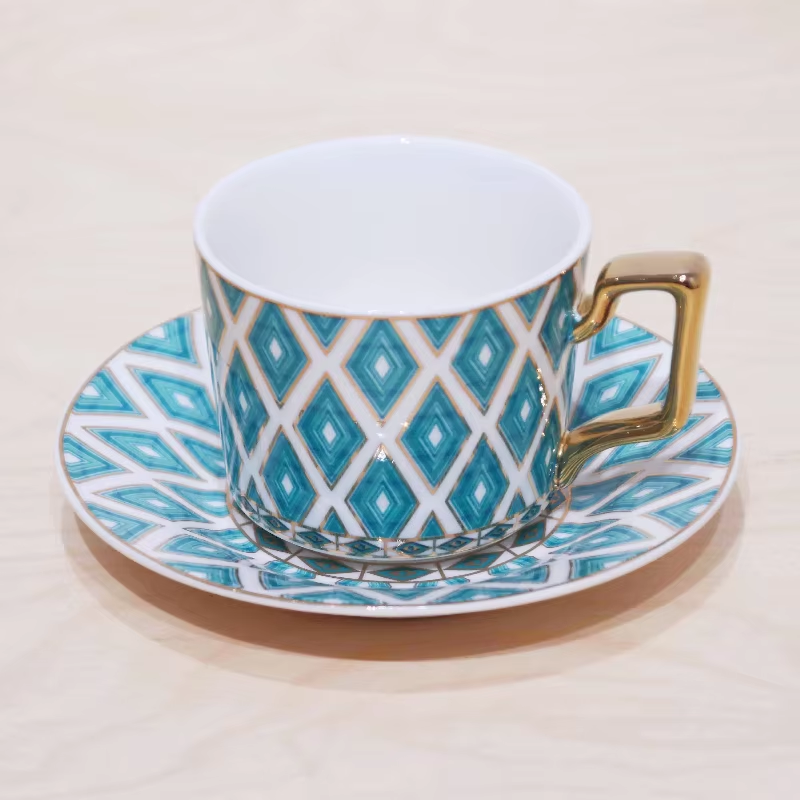
Ceramic plates with glaze stay stain resistant mainly because they don't absorb much liquid. Unglazed versions tend to soak up stuff pretty easily since they can be as porous as 15%. The tiny holes let drinks and food particles work their way in. But when there's a good glaze layer, that drops down to under half a percent porosity. What happens is coffee rings, oil marks, and even tomato sauce just sit on top instead of getting absorbed deep inside the plate. Most people find these surface stains come off with regular cleaning products without needing special treatments or replacements.
Glazed ceramics have that smooth, glassy surface which makes them pretty good at keeping liquids away. When water hits these surfaces, it tends to form beads instead of spreading out because of surface tension effects. The angle where the water meets the ceramic is usually over 110 degrees, which scientists call hydrophobic behavior. This property means less stuff sticks to the surface after use, making cleanup much easier than with materials like stoneware or terracotta that absorb liquids into their pores. Of course, no material is perfect, but for everyday kitchenware this difference really matters when dealing with spills and stains.
Firing ceramics above 1200°C transforms clay and glaze into a dense, crystalline structure with pore sizes under 1 micron—small enough to block most organic molecules. Industry research shows high-fired ceramics outperform low-fired variants by 70% in accelerated aging tests, maintaining long-term stain resistance through structural integrity.
When pottery gets fired in the kiln, the glaze actually melts down and forms what's called a vitrified layer that sticks to the ceramic body at a chemical level. The end result? Surface hardness jumps up to around 6 or 7 on the Mohs scale, which puts it right up there with quartz in terms of scratch resistance. Research indicates these treated surfaces absorb stains way less than regular unglazed ceramics too about 95% less according to lab tests. Plus they hold their ground against all sorts of acids and bases from pH 2 all the way up to pH 12. That makes glazed ceramics particularly good for serving things like citrus fruits or tomato-based sauces where staining would be a real problem otherwise.
Modern glazed ceramics use lead-free, frit-based glazes that are chemically inert and non-reactive with food. These formulations prevent staining and degradation over time. Regulatory testing confirms they retain anti-stain performance through more than 10,000 cleaning cycles, surpassing plastic and enameled metal in durability and safety.
Advanced ceramic coatings incorporate hydrophobic and super-hydrophobic technologies, achieving water contact angles above 150° in some cases. These treatments form a durable, bonded barrier that causes liquids to bead and roll off. Commercial tests show such coatings reduce absorption of coffee and oil by 87% compared to untreated surfaces.
The "lotus effect" enables self-cleaning behavior: liquid droplets pull away food particles as they roll off the surface. This mechanism prevents 72% of common residues—like tomato sauce and turmeric—from adhering (non-porous surface study, 2023). Tilting the plate at ±15° during rinsing enhances runoff and improves cleaning efficiency.
Unglazed ceramics absorb 3–7% water due to open pores, while glazed plates stay below 0.5% absorption thanks to their vitrified layer. This difference significantly affects hygiene and maintenance:
| Property | Glazed Ceramic Plate | Unglazed Ceramic |
|---|---|---|
| Stain Penetration | Surface-level only | Subsurface |
| Bacterial Adhesion | 12 CFU/cm² | 380 CFU/cm² |
| Cleaning Efficiency | 90% residue removal | 45% residue removal |
By eliminating capillary action, the non-porous glaze reduces both staining and microbial retention, enhancing cleanliness and ease of care.
Warm water and pH-neutral dish soap effectively remove everyday residues without damaging the glaze. A 2023 NSF International study found cellulose sponges reduce microscopic scratching by 83% compared to synthetic options. Always rinse thoroughly to avoid dulling the surface with soap residue.
Microfibre cloths leverage electrostatic properties to capture 99% of grease particles without chemicals. Their non-abrasive texture prevents swirl marks, unlike cotton towels that leave behind 5–10 micron lint fibers (Textile Research Journal 2023). Use water below 60°C to prevent thermal stress on the glaze.
A paste of baking soda and water (3:1 ratio) acts as a gentle oxidizer, lifting coffee and turmeric stains via effervescence. Research indicates it removes 94% of organic stains without altering surface hydrophobicity. Limit applications to 10 minutes to preserve glaze integrity.
Scouring pads and steel wool create scratches 3–5 μm deep, increasing stain retention by 40% (Journal of Surface Cleaning, 2024). Instead, use melamine foam for mineral buildup—it removes calcium deposits 2.6 times more efficiently than baking soda in controlled tests.
Glazed ceramic plates can last decades when properly maintained. Their durability stems from high-temperature firing that forms a vitrified surface, but consistent care is essential to preserve performance over time.
Although resistant to stains, the glaze is vulnerable to mechanical wear. Store plates vertically with protective padding or felt separators to prevent micro-scratches from stacking. In commercial settings, NSF-certified shelving with silicone grips offers secure storage and reduces chipping risks during handling.
Sudden temperature changes, particularly when they jump over 150°C (about 302°F), often lead to tiny cracks forming because the glaze expands at a different rate than the clay underneath. According to research from World of Stones USA back in 2023, ceramic pieces that have been fired at temperatures above 1200°C show around 35% better ability to handle these kinds of stresses. When handling ceramic plates, it's wise practice to let them cool down completely to room temperature first before putting them into ovens or freezers. This simple step can save a lot of headaches later on.
With proper care, glazed ceramic tableware retains 95% of its original stain resistance after 10 years of regular use, far outperforming porous materials like wood or terracotta.
Ceramic with glaze is really good at resisting stains because it has this surface that doesn't let things soak in. Wood is totally different since it drinks up liquids and gets stained forever. Ceramic just sits there and keeps whatever spills on it from going anywhere. Plastic surfaces tend to hold onto stuff like tea stains and oily marks after a while. Some metals can actually react with what they touch too, either rusting away or giving food that weird metallic taste nobody wants. What makes ceramic stand out though is how stable it stays chemically. Acidic foods won't do anything to change its look or affect what we eat, which is why so many kitchenware manufacturers stick with it for their products meant to last.
The vitrified surface allows effortless cleaning with warm water and mild detergent. Because it doesn’t trap food particles like unglazed stoneware or wood, a simple wipe removes 92% of common stains (Material Science Journal 2023), versus 45–60% on porous alternatives. This makes ceramic particularly well-suited for high-turnover environments.
Non-porous ceramic resists bacterial growth three times longer than plastic or wood (Food Safety Report 2023). Its scratch-resistant surface doesn’t harbor microbes like worn plastic, and it withstands dishwasher temperatures without warping. These qualities make glazed ceramic a hygienic, sustainable choice for both home and commercial use.
 EN
EN