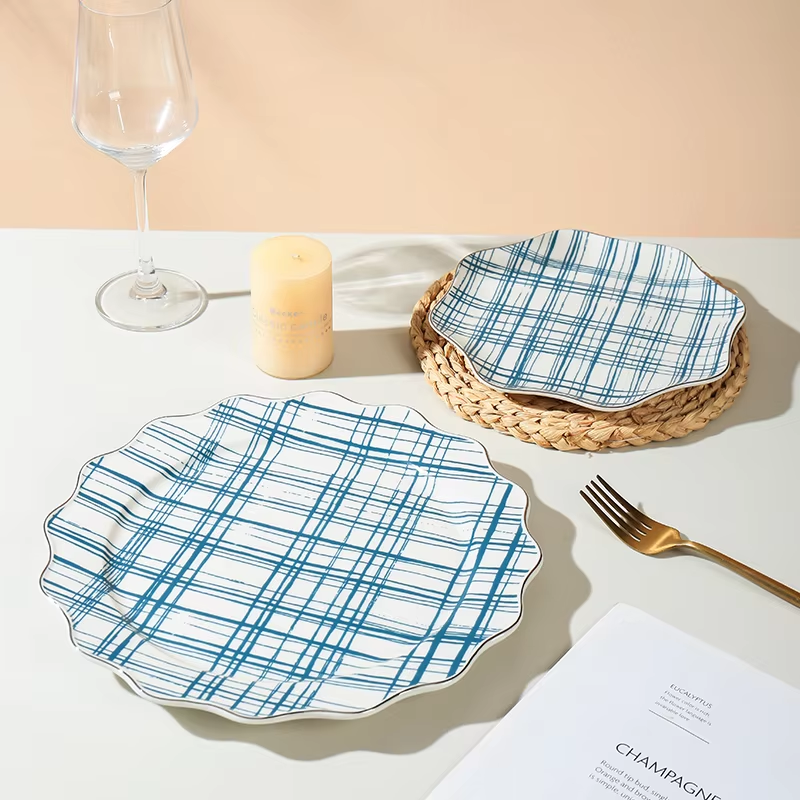
Making ceramic plates starts with basic ingredients including ball clay, various mineral additives, and plenty of water. Artisans shape these raw materials into plates using methods such as pressing them into molds, casting liquid clay mixtures, or working on a spinning wheel called jiggering. After forming, the pieces need careful drying under controlled conditions so they don't warp or crack. Once dry enough, they go into kilns for firing between roughly 1100 and 1300 degrees Celsius. This intense heat transforms the clay into a hardened state suitable for everyday use. Since ceramic plates typically fire at lower temperatures than porcelain items do, their surface remains somewhat porous naturally. To fix this and make sure nothing gets absorbed, manufacturers apply glazes that seal everything up properly, ensuring both safety when handling food and lasting quality over time.
Once formed, ceramic plates need time to dry out completely. This usually takes anywhere from 24 to almost 48 hours, which helps bring down the moisture content to under 1%. There are actually two main steps when it comes to firing these plates. First comes the bisque firing stage where temperatures reach about 900 degrees Celsius. This makes the basic shape solid enough to handle. Then there's the second part called glaze firing, which typically needs temperatures above 1250 degrees Celsius. This step gives the plate its final strength and creates that smooth surface we all know and love. Manufacturers also run tests to check how well the plates can handle sudden temperature changes. Most modern ceramics can withstand shifts of around 300 degrees Celsius, so they work great for moving straight from the oven to the dinner table without worrying about cracks forming.
Glazes made from silica, alumina, and flux minerals produce food-safe, non-porous surfaces. Decoration methods include:
Companies that have ISO 9001 certification are required to maintain strict quality management systems throughout their operations. These include detailed documentation for everything from checking incoming materials to packing finished goods, plus regular checks by outside auditors who come around roughly every three years. When making food contact items, sticking to FDA regulations regarding heavy metals like lead and cadmium becomes absolutely necessary for safety reasons. There's also something called MOCA standards that test whether ceramic coatings can withstand microwave use without breaking down. All these different quality marks actually make a difference. According to recent data from Food Safety Report in 2023, manufacturers with proper certifications experience about 34 percent fewer defects than those without any form of official recognition. That's quite significant when considering long term product reliability and customer satisfaction.
When manufacturers follow ISO 6486-1 guidelines, they get better acid resistance and significantly reduce metal leaching during food contact simulations. Standards bodies like BSCI look at things like how efficiently kilns consume energy and whether workers are treated fairly these days, which has become pretty much essential if companies want to sell products in Europe. Testing shows that factories certified against both sets of requirements tend to produce about 28 percent less waste overall, plus their materials withstand temperature changes roughly 19% better according to third party tests conducted last year by several independent labs across Germany and France.
Top suppliers welcome unannounced audits evaluating not just certificate possession but actual QMS implementation. Key verification points include:
The quality control process begins with XRD analysis on raw materials just to make sure we're getting kaolin that's at least 98% pure. When it comes time for pressing, special force sensors keep an eye on things so the compaction stays pretty much consistent around 18 to 22 MPa range. After bisque firing, robotic vision systems take over to check those blanks against our size specs, looking for any deviations greater than plus or minus 0.3mm. Companies that mix ISO 9001 certification with proper statistical process control have seen their porosity issues drop by about 37%, which is quite a jump from what traditional methods typically deliver. The industry research backs this up too.
Top quality manufacturing plants have started implementing laser triangulation scanners that can spot tiny surface flaws measuring just 50 micrometers before any glazing takes place. These systems catch around 99 out of every 100 defective pieces right at the start of production. For final checks, products go through rigorous testing including thermal shocks where they're heated to 250 degrees Celsius then plunged into ice water for fifteen cycles total. There's also mechanical stress testing that simulates what happens after about ten years of constant use in commercial dishwashers according to ASTM standards. All these steps together keep breakage rates under control at less than 0.8 percent for tableware that meets FDA requirements, which makes a real difference when looking at long term costs and customer satisfaction.
High-performance ceramic plates rely on optimized clay blends:
When it comes to making things cost effectively, manufacturers often turn to local ball clays mixed with around 15 to 20 percent imported kaolin. This combination helps reach those important strength benchmarks we need, typically around 35 MPa for the modulus of rupture. For glazes that are safe but still look great, many companies go with lead free options that include zirconium silicate somewhere between 12 and 15 percent along with borosilicate frits. These formulations pass all the FDA tests required while keeping that shiny finish above 85 GU on the gloss meter. What makes this method so appealing is how it cuts down material expenses by roughly 18 to 22 percent without compromising on durability in dishwashers. We've tested this stuff extensively too, running it through well over 500 wash cycles without seeing any real degradation in quality.
Getting physical prototypes made is really important when checking out ceramic plate designs before going into full scale production. When we actually hold these prototypes in our hands, we can test how they handle sudden temperature changes, check where the weight sits, and see if people find them comfortable to use something CAD models just can't show us properly. Some research done last year pointed out that around four out of five manufacturing problems come from little design issues that nobody caught during the initial stages. Plus, having working prototypes lets us put them through their paces in actual conditions, like seeing if they work well in microwaves or survive multiple trips through dishwashers without cracking.
Top manufacturers these days are combining cutting edge tools like 3D printed molds and computer controlled jiggering arms with cross functional engineering groups to tweak those bespoke designs. Take for instance a European restaurant group that needed oval dinner plates with extra strong edges. The supplier worked through several rounds of prototypes adjusting the glaze formula and figuring out better kiln placement until they got it right. When suppliers bring fresh ideas to the table during design meetings about alternative materials or different approaches to solving problems, it really cuts down on potential headaches later in production. This kind of collaboration makes all the difference between a successful launch and costly delays.
Manufacturers who focus on efficiency can produce working prototypes within 2 to 3 weeks through rapid sintering methods, which cuts down on time compared to the usual 6 to 8 week wait for traditional approaches. Industry reports from 2023 suggest this speed boost allows for about 60-65% quicker design cycles when companies need to test multiple versions. When products have intricate elements such as ergonomic handles or branded logos pressed into surfaces, extra work often goes into adjusting molds to get those details right. Companies that maintain separate prototyping facilities tend to avoid bottlenecks and keep their product development processes moving forward at a good pace, something many startups rely on during critical development phases.
Good business relationships depend heavily on clear communication about when products will arrive and what kind of orders make sense. Small companies especially appreciate suppliers who don't require minimum orders above 1,000 units since that keeps their inventory costs down. Bigger businesses need something different though - they want operations that can scale along with their growth, typically handling increases around 20 to maybe even 30 percent each year. Companies that invest in modern supply chain monitoring tools see major improvements. One study found these businesses cut down late deliveries by nearly 60 percent over competitors still using old fashioned paper trails and spreadsheets for tracking shipments.
Effective shipping solutions include vibration-resistant foam inserts and ISO 8319-compliant crating, reducing transit damage by up to 92%. Leading suppliers pair climate-controlled containers with blockchain-tracked logistics to maintain integrity across long-distance shipments, achieving breakage rates under 25 ppm even for transoceanic deliveries.
A balanced supplier scorecard should weigh six critical factors:
| Criteria | Weight (%) | Performance Metric |
|---|---|---|
| Defect Rate | 30 | ≤0.5% per ANSI Z1.4 sampling |
| Thermal Shock Resistance | 25 | 300+ cycles (ASTM C485) |
| MOQ Flexibility | 20 | 500–10,000 unit ranges |
| Sustainability Compliance | 15 | ISO 14001 or equivalent |
| Price Stability | 10 | ±3% annual fluctuation cap |
Suppliers scoring ≥85/100 typically achieve 98% on-time delivery rates.
Pre-shipment inspections must verify three key metrics:
The key steps include forming, drying, firing, glazing, and decoration. The process begins by shaping raw materials into plates, followed by drying and firing them in kilns. Glazing and decoration are then applied for functional and aesthetic purposes.
Certifications such as ISO 9001, FDA, and MOCA ensure reliable manufacturing processes, safety standards, and reduced defects. These certifications help ensure long-term product reliability and customer satisfaction.
Quality control involves material analysis, defect detection, and durability testing. Manufacturers use advanced technology like laser scanners to spot defects early, ensuring high-quality final products.
Prototypes allow manufacturers to validate designs and test functionality before large-scale production. They help identify potential design issues and provide real-world performance data.
 EN
EN