Natural earth materials, like ceramic, give a cup a quality and feel that is unique. Ceramic tea cups have been a favorite choice of natural clay and mineral tea aficionados for centuries. The cups earthy texture and feel have modern qualities that can reflect and connect those that partake to ancient tea customs and cultures. Unlike mass-manufactured products, each cup is hand finished and exhibits it's own decorative and unique designs. The slight differences and irregularities in the cup and glaze, and the finished cups gentle weight, often make the experience of drinking from that cup more intimate. In irreplaceable ways, the natural composition of clay cup interacts with tea to create a relationship that goes beyond tea consumption. It does so by absorbing and adding to the tea aroma, and by developing in ways that serve to improve the quality of subsequent brewing. The tea these cups produce, from clay tea brewing, serves to create a space for reflection and appreciation.
Old masters of tea say that the porous characteristic of some ceramics aids in the flavor improvement of the tea due to how it breathes while being consumed. Preferring materials from nature rather than some of the hand-crafted designs is a deliberate way to show some appreciation of our essence of traditional and of beauty in imperfections.
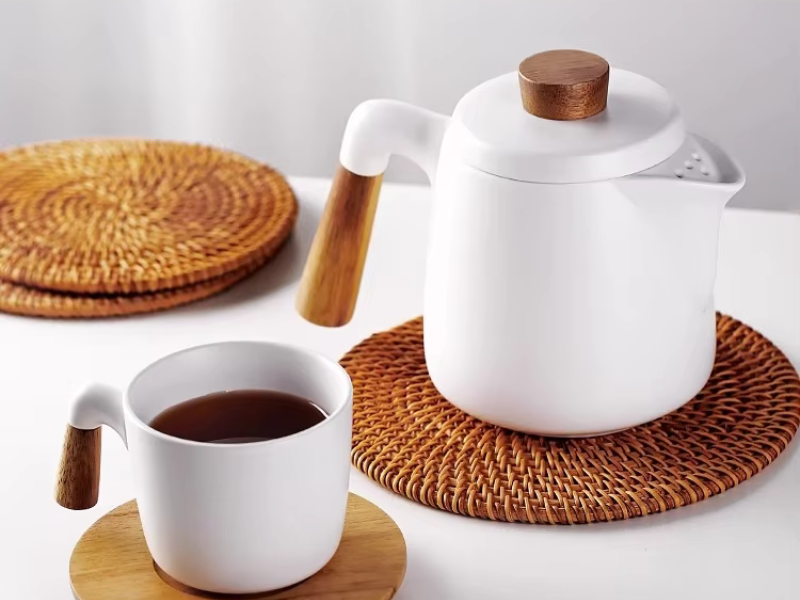
One of the most tangible reasons traditional tea drinkers continue to favor ceramic tea cups is because of how temperature is handled. Quality ceramics do a great job of heat retention; When storing tea in glass or metal containers, tea becomes cooler at a quicker rate. Insulating heat escape is the thick walls of a ceramic cup. Your pu-erh or oolong stays at its optimal temperature longer so you can drink at a comfortable pace. Also, the heat retention qualities of the ceramic make the outside of the cup comfortable to hold so you won't have to place the cup on an external surface to cool. The temperature shock of the ceramic is stable and keeps the tea and ceramic at the same temperature to preserve the tea. People appreciate cups that allow steeping and drinking at the perfect temperatures required to maximize the tea's flavors.
French porcelain and fine bone china are luxurious materials. These elegant cups are crafted from materials such as French porcelain and fine bone china, and will keep your black or white tea at the same temperature. They're also elegant and have a classic timelessness.
Not surprisingly, ceramic tea cups have many ceramic benefits, and also serve as a display of artistic creativity and craftsmanship. In many cultures centered on tea drinking, vessels of all types have artistic and decorative traditions and symbolism. Just the glazing techniques show centuries of ingenuity—celadon glazes that look like jade, and temmoku glazes that look like oil-spotted, droppy, and celestial. In many traditional tea ceremonies it is customary to choose cups of the appropriate design or glazing style to fit the season, the occasion, or the tea served. The Effects of Art on Teas. Aesthetics synergize the tea experience on all levels. Many collectors prize their ceramic tea cups and their "personalities" as distinct and if over the years a cup becomes especially dear it may be reserved for a particular tea or stored for a special occasion. In many Asian cultures, hospitality, and sharing tea from ceramic vessels is a tradition that expresses etiquette, mindfulness, and the special nature of their tea. Each detail of the cup is a part of the refined tradition: its weight, the glazes that decorate the cup and the vessels, its materials, the sound it makes when its lid is replaced, and the voice its lid makes when it is replaced. Over the years, each detail of the cup, and the tea, as well, and the materials used for its construction have defined a refined tradition that values and respects all the materials used and the craft of the cup. Each detail, voice, and sound of the cup work with materials to form a rare and distinct tradition that has evolved over centuries.
This deep cultural history has allowed what could be a mundane everyday activity to become a significant ritual that helps people connect with the past, with one another, and with art.
Tea mugs are able to do so much and because of it, they are universally adaptable to any kind of preparation. Such a trait as material neutrality that doesn't leech any flavors or scents is important so that the real characteristic qualities of each tea variety shine through. Strong and fermented brews like pu-erh, for example, require higher temperatures and a thick-walled ceramic cup will do the job of retaining heat so that the tea can fully express and showcase its complexities. For delicate teas like green or white, on the other hand, a thinner ceramic vessel will do just fine. It will prevent overheating the tea, but will provide enough insulation to keep the tea warm on the inside. Together, these qualities fine-tune the versatility of the cup and, paired with the large variety of ceramic mugs available, make it tea enthusiasts' top choice to create a collection of tea mugs for different brewing methods and styles to optimize the experience. Another reason professional tea tasters prefer ceramics is affordability. Using other materials for the tea tasters' profession is wasteful because they will get the best ceramics for tea and other materials will clash with the tea.
Being able to enjoy the same material family for gong fu sessions, casual daily drinking and formal tea gatherings makes options in ceramic incredibly practical for tea lovers who would like to explore different aspects of tea culture without having to acquire different equipment for every occasion.
 EN
EN