Choosing a ceramic manufacturer is the highest-risk step in building a tableware line, and the choice shapes your margins for years. The global ceramic tableware market reached USD 18.82 billion in 2025 and is projected to hit USD 26.13 billion by 2030, a CAGR of 6.21% (Mordor Intelligence, June 2025). Every brand buying into that market asks the same thing: how do you tell a dependable ceramic tableware manufacturer from a workshop that only looks good on paper? A ceramic tableware manufacturer earns trust through documents and process, not catalogs. These ten questions come from four decades of custom orders at Chaozhou Qianyue Ceramics, a custom ceramics supplier since 1984, and they apply whether you source from a porcelain dinnerware manufacturer or any other factory.
1. Can you show current food-contact certifications?
Food safety decides whether your product can legally enter your market, so make it the first filter. Ask for LFGB, (EC) No 1935/2004, FDA or equivalent certificates, plus factory audits such as BSCI and ISO 9001. A serious custom ceramics supplier keeps documents current and shares them freely. When a ceramic tableware manufacturer sends its certification pack with the quote, that is a good first signal. Qianyue holds BSCI, LFGB, (EC) No 1935/2004, ISO 9001 and ISO45001; every piece is lead-free, cadmium-free, microwave-safe and dishwasher-safe.
2. What is your real production capacity and history?
Ask how many factories and production lines the porcelain dinnerware manufacturer operates, and its annual output. A porcelain dinnerware manufacturer with multiple lines absorbs order spikes without quality dips. Qianyue runs two factories, more than 12 production lines and roughly 8 million sets a year - a porcelain dinnerware manufacturer that controls its own volume controls its own quality. Ask how long the OEM ceramic supplier has done export work, because one with decades of overseas orders has solved problems you have not met yet. The best porcelain dinnerware manufacturer invites you to verify these numbers on a live call.
3. Do you handle customization in-house?
For custom shapes, glazes, logos and decals, the factory must control mold making, forming, glazing, decal and kiln firing internally. In-house control separates a true OEM ceramic supplier from a trader reselling another factory's output. A ceramic dinnerware factory that manages the full chain keeps quality consistent and shortens lead times. Ask that the OEM ceramic supplier name the person who runs each stage - it will answer for every one. Selling under your own label? Ask the ceramic tableware manufacturer about private-label packaging and decal services.
4. What are your sample and pre-production rules?
Ask how many sample rounds are included and who pays shipping. A reliable ceramic tableware manufacturer samples from the same molds, clay and glaze planned for bulk, then keeps the approved sample as the container benchmark. Ask how a failed first sample is handled: strong factories solve and re-run; weak ones blame your design. Also ask whether sample courier cost is credited to your order - most OEM ceramic supplier teams apply it to the first bulk invoice.
5. How do you control quality across a full run?
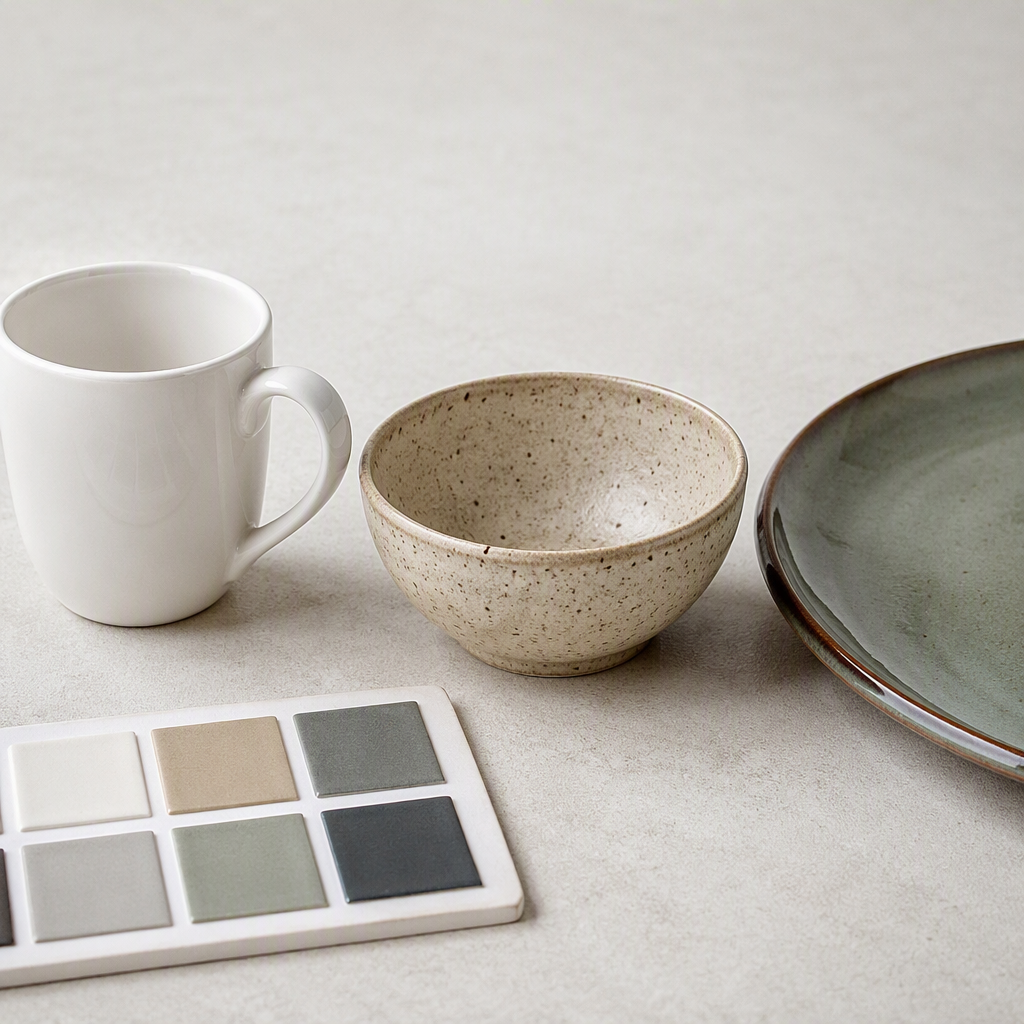
A beautiful prototype means nothing if piece 5,000 differs from piece one. Ask when inspections happen, what size and glaze tolerance is allowed, and whether final inspection runs before packing. Confirm the factory accepts third-party audits; a porcelain dinnerware manufacturer with disciplined quality control welcomes them. Ask your custom ceramics supplier for defect-rate history on similar programs; quality control is the core duty of a ceramic dinnerware factory, so a vague answer should end the conversation.
6. What are your MOQ and price breaks?
Ask the custom ceramics supplier for MOQ per design and mixed-container options; pricing improves with volume, so request the full price-break ladder. Beware quotes far below market: in ceramics, low prices mean thinner walls or skipped inspection. A solid custom ceramics supplier explains how the price is built - clay, decoration, firing, packing - instead of competing on the number alone. The cheapest quote is often the most expensive container. Compare the MOQ and price structure of each ceramic dinnerware factory side by side before you commit.
7. What is your realistic lead time, and what delays it?
Ask what sits inside the quote: mold making, sampling, bulk production, packing - and what pushes dates out, such as glaze matching and decal approval. An experienced OEM ceramic supplier gives stage-by-stage dates with buffer, not one optimistic figure. A factory that refuses to break down lead time is hiding something. The right ceramic tableware manufacturer tells you which steps you can compress and which cannot be rushed.
8. How do you pack for export?
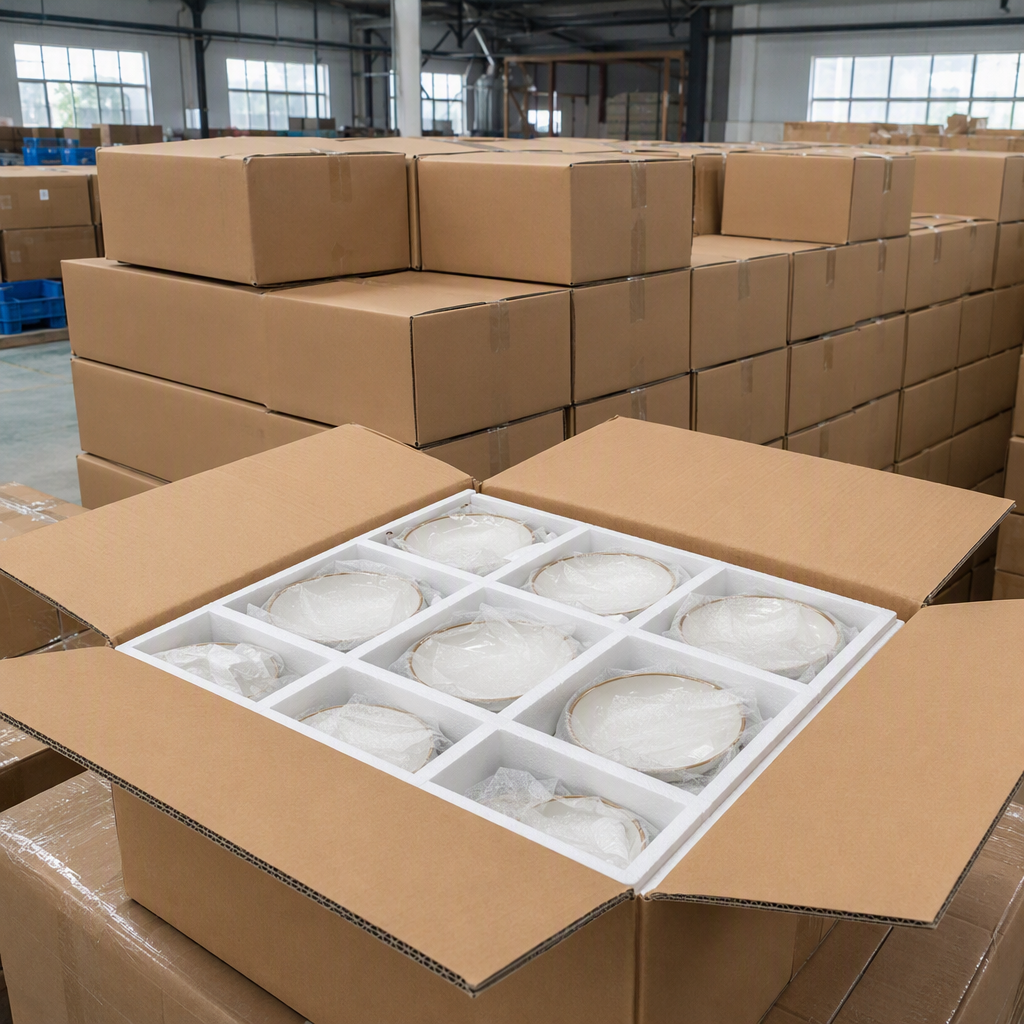
Ceramics break when packing is an afterthought. Ask about individual wrapping, corrugated dividers and carton strength for ocean freight. A ceramic tableware manufacturer shipping to Europe, the Americas, Oceania, Asia and the Middle East has packaging refined by real transit damage. Ask for their export carton spec and documented damage rate - both measurable, both revealing. A porcelain dinnerware factory with low damage claims earned that record through tested packing.
9. What happens when a claim arrives?
Disputes happen in every trade relationship; the question is how they are handled. Ask whether the supplier works from photos, how they treat destination breakage, and how fast a remedy is agreed. A porcelain dinnerware manufacturer with a clear after-sales process protects your margin because issues close in days, not months. Ask the OEM ceramic supplier for one real claim example and how it ended - the story tells you more than the policy.
10. Who exactly will I deal with after the order?
The closer is not always the production manager at a ceramic dinnerware factory. Ask who your daily contact is, their time zone coverage, and who handles complaints when that person is away. A custom ceramics supplier with a dedicated export team gives continuity as your program grows into repeat orders. Ask for the name and direct contact of the account owner after sample approval; service quality is what keeps a ceramic dinnerware factory on your approved list year after year.
Red flags during your search
An OEM ceramic supplier that cannot produce certificates quickly usually does not hold them. Those who promise any glaze in a week are over-promising on the hardest ceramic step. Factories showing only finished photos, refusing a live video walkthrough, may not own production. A quote with no clarifying questions is built on assumptions. When a ceramic dinnerware factory shows several of these signs at once, move on rather than hope for the best.
How to compare the answers
Score every candidate on the same ten questions, weighted for your program. When two factories tie, video-audit both; the right ceramic tableware manufacturer offers references you can call. For the level of detail a serious ceramic tableware manufacturer should discuss, read our guide on custom porcelain plates for events.
Start the conversation with Qianyue
Since 1984, Chaozhou Qianyue Ceramics has answered these questions for buyers worldwide. As a family-owned ceramic dinnerware factory and porcelain dinnerware manufacturer, we control custom production in-house, hold current food-contact certifications and ship export-ready cartons globally. Whether you need a branded run of premium ceramic mugs or a full private-label dinnerware program, we answer the ten questions honestly - including the ones other manufacturers hope you never ask. Email [email protected] or call/WhatsApp +86-13534638099. Browse our range at https://www.qyceramics.com/.
FAQ
Q: How do I verify a ceramic manufacturer's certifications are real? A: Ask for the certificate number and issuing body, then confirm with the agency or request a verification call. A porcelain dinnerware manufacturer with nothing to hide will help you verify, and any ceramic dinnerware factory that holds these certificates keeps them filed for customer review.
Q: What is a typical MOQ for custom ceramics? A: MOQ depends on shape, decoration and packaging. Standard mugs allow lower quantities than fully custom shapes needing new molds. Ask each OEM ceramic supplier for per-design MOQ and mixed-container options. A porcelain dinnerware manufacturer will usually offer tiered pricing that rewards larger volumes. Send the item and target quantity to any custom ceramics supplier and ask for a written quote.
Q: How long from first inquiry to delivered container? A: It covers mold making, sampling, approval, bulk production and shipping. Request a stage-by-stage schedule from any custom ceramics supplier and confirm whether peak season shifts dates. A porcelain dinnerware manufacturer with disciplined planning will show you the calendar.
Q: Should I use third-party inspection before shipment? A: For first orders and large volumes, yes. Independent pre-shipment inspection verifies quality against the approved sample and gives documented evidence before the container leaves the ceramic dinnerware factory. It protects both sides and keeps the relationship factual. This is standard practice with a serious ceramic tableware manufacturer.
 EN
EN